


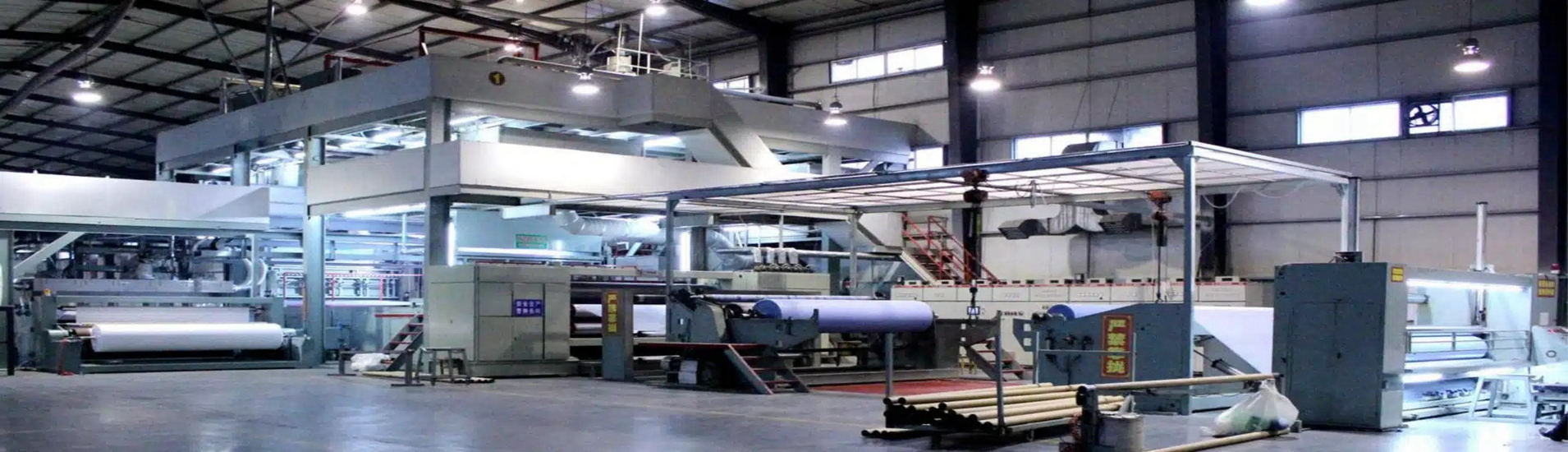
- What is the flame retardant nonwoven fabric ?
Flame retardant fabric is a special type of flame resistant nonwoven fabric. This material can self-extinguish after a slow burn for a period of time. Flame retardant nonwoven fabrics provide a safer environment by reducing heat and preventing the rapid development of fire. It is crucial to find a manufacturer that can provide you with the right quality fabric. Any flaws in the fabric can have serious consequences for people wearing the fabric and working in hazardous locations.
Flame retardancy in nonwoven fabrics can be achieved in two ways: additives (mechanically mixing flame retardant chemicals with polymers before extrusion) and topical treatments (coating fibers or fabrics with flame retardant chemicals). Additive types are suitable for thermoplastics, while topical treatments can be used for thermoplastics, thermosets, and natural fibers.

Flame retardant additives for nonwovens must meet the following requirements
(1) High flame retardant efficiency, which can give nonwoven fabrics good self-extinguishing or flame retardant properties.
(2) Good dispersibility, which can penetrate into nonwoven fabrics well.
(3) It has a suitable decomposition temperature, that is, it does not decompose at the processing temperature of the material, but can decompose rapidly when the material is heated to decompose to exert the flame retardant effect.
(4) Low toxicity or basically non-toxic, the products after combustion are also low toxicity, low corrosiveness, environmentally friendly and pollution-free.
(5) When used in conjunction with nonwoven fabrics, it does not reduce the mechanical properties, electrical properties, weather resistance and heat deformation temperature of nonwoven fabrics.
(6) Good durability, can be retained in nonwoven fabric products for a long time, and exert its flame retardant effect.
Flame retardant nonwoven fabric testing standards
In the furniture and home textile industry, flame-retardant pp spunbond non-woven fabrics are widely used as lining or covering fabrics for sofas, tables, chairs, beds and mattresses.
When we produce pp spunbond fabrics, we generally add flame-retardant masterbatches that meet the British BS5852 standard or the American CFR1633 or TB117 standard.
The flame-retardant masterbatch is added to the fiber through polymer polymerization, composite spinning, technical modification and other processes to make the non-woven fabric flame-retardant. Flame-retardant non-woven fabrics that pass the US CFR1633 test, the US TB117, and the British BS5852 test standards are suitable for export, have a wider range of applications, and have better flame retardant and fireproof effects than general flame retardant materials.
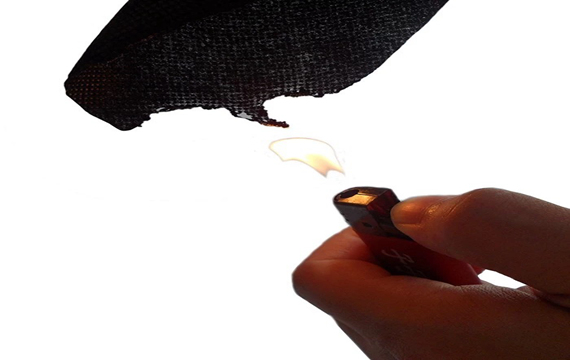
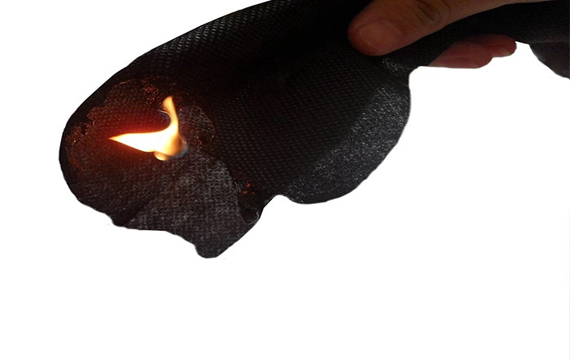
Burning effect of flame retardant nonwoven fabrics
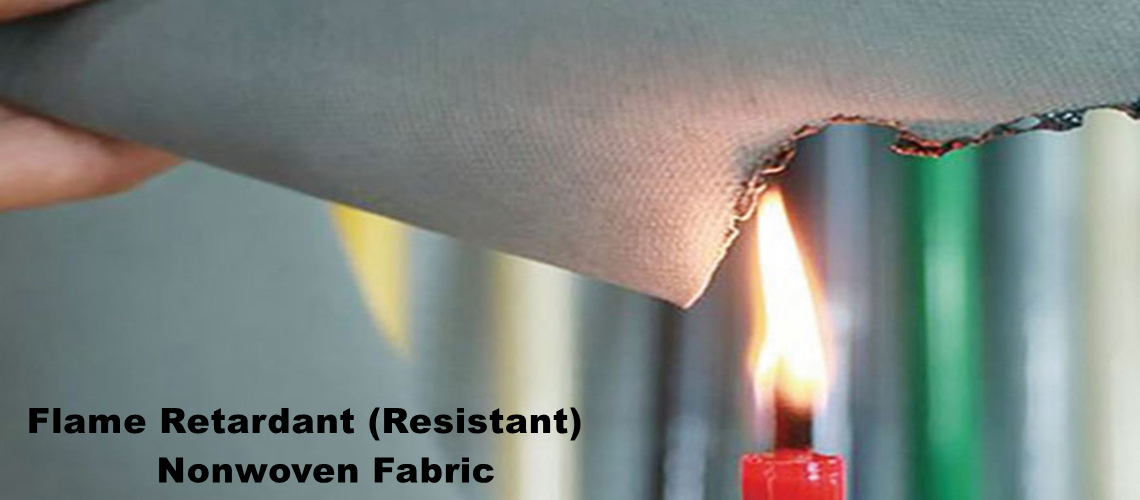
Flame retardant pp spunbond fabric (custom flame retardant non-woven fabric) will automatically extinguish within 2 seconds after the fire source is removed.
And the burning fabric will be quickly carbonized, without melting or dripping, which can effectively prevent the flame from burning and spreading, and reduce or avoid burns and scalds.
Flame retardant non-woven fabric (China flame retardant non-woven fabric supplier) can also be used in automotive interiors, fire fighting equipment, chemicals, machinery and other industries.
Related functional nonwoven products

Application scenarios and precautions of flame-retardant non-woven fabrics
Flame-retardant non-woven fabrics are widely used in fire protection, building materials, automotive interiors, aerospace, industrial insulation, electrical and electronic fields, and have good fire resistance. The control of its production process and material formula has a great influence on the flame retardant performance, and should be selected and used according to different application scenarios.
At the same time, the following matters should be noted when using flame-retardant non-woven fabrics:
1. Keep dry. Prevent moisture and water from affecting the flame retardant performance.
2. Pay attention to insect prevention during storage. Insect repellents should not be directly applied to non-woven fabrics.
3. Avoid collision with sharp or sharp objects during use to prevent damage.
4. Do not use in high temperature environments.
5. When using flame-retardant non-woven fabrics, be sure to follow the product instructions or safety manual.
In short, as a material with good fire resistance, the specification of the testing standards and compliance with application precautions of flame-retardant non-woven fabrics are the key to ensuring their performance. At the same time, it is also necessary to make reasonable selections and use them in specific usage scenarios.