



PET (polyester) Nonwoven Fabric
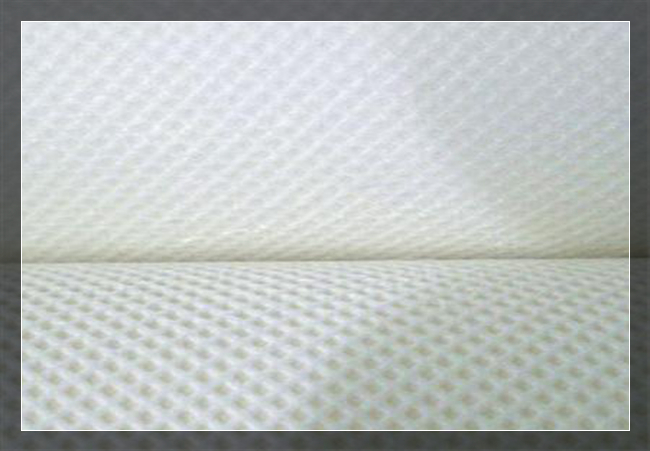
PET refers to polyester, which is polyethylene terephthalate. Polyester is currently the most cost-effective and widely used dust collection filter material. PET non-woven fabric is a type of non-woven fabric. Its raw material is 100% polyester. It is made of multiple continuous polyester filaments through spinning and hot rolling, so it is also called PET spunbond filament non-woven fabric.
Compared with other types of non-woven fabrics, PET non-woven fabric is more high-end and has the characteristics of waterproof, fireproof, and high temperature resistance. It can often be seen in furniture mattresses, advertising, industrial use, medical and health fields.
- Polyester Nonwoven Quality Requirements
- Polyester Nonwoven Features

Except for its poor alkali resistance, PET has excellent resistance to other chemical reagents.
(1) Acid resistance: PET is very stable to acids (especially organic acids). It has no loss of strength when immersed in 5% hydrochloric acid solution at 100°C for 24 hours or in 70% sulfuric acid solution at 40°C for 72 hours. However, it cannot resist the long-term action of concentrated sulfuric acid or concentrated nitric acid at room temperature.
(2) Alkali resistance: The ester groups on the PET macromolecules are easily hydrolyzed by alkali. The fiber can be damaged by concentrated alkali at room temperature and by dilute alkali at high temperature. It is only relatively stable to dilute alkali or weak alkali at low temperature.
(3) Solvent resistance: PET has extremely strong resistance to general non-polar organic solvents, and even has considerable resistance to polar organic solvents at room temperature.
(4) Microbial resistance: PET is resistant to microbial action, insect infestation, and mold.
Therefore, it is often used to manufacture geotextiles and environmental protection products. For example, a large amount of PET nonwoven fabrics are used in landfills.
The properties of the fiber are closely related to the thermal properties of the polymer. Polyester has good heat resistance, with a softening point of 238~240℃. The melting point of PET used in general industrial products is 255~260℃. PET can maintain its good physical and mechanical properties in a wide temperature range, and is less affected by temperature in the temperature range of 20~80℃. The long-term use temperature can reach 120℃, and it can be used at 150℃ for a period of time.

Application Areas
- Home textiles: anti-velvet lining, heat transfer printing, non-woven calendars, office document hanging bags, curtains, vacuum cleaner bags, disposable garbage bags.
- Packaging: cable packaging cloth, handbags, container bags, flower packaging materials, desiccant/adsorbent packaging materials. Decorative cloth: wall cloth, floor leather cloth, woven geotextile.
- Agriculture: agricultural harvesting cloth, crop and plant protection cloth, agricultural weeding cloth, fruit tree cultivation bags, etc.
- Waterproof materials: advanced breathable waterproof base cloth (wet type).
- Industrial applications: filter materials, insulation materials, electrical equipment, reinforcement materials, support materials.Filter materials: gearbox oil filtration.
- Others: composite membrane base cloth, baby and adult diapers, sanitary napkins, disposable sanitary materials, protective products, etc.
PET Spunbond Nonwovens
- Packaging materials, food packaging, filter materials, tea bags: 15~70g/sm
- Interlinings for cold-proof clothing, hats, shoe linings, reusable agricultural films, fruit bags, kitchen filter paper, tablecloths, disposable medical supplies: 20~50g/sm.
- Agricultural seedlings, crop coverings: 20~35g/sm, original color, white, silver gray.
- Outdoor vegetable antifreeze and insulation supplies: 30~40g/sm.
- Insulation layer inside greenhouse: 30~50g/sm.
- Insulation layer on the top of greenhouse: 50~100g/sm
- Industrial filter materials, cable trays, wall decoration, cement packaging bags that can be used four times, printed maps and pictures, mail bags, clothing linings, disposable work clothes, shopping bags, seat sheets, furniture and indoor linings, strong supplementary materials: 50~100g/sm
- Carpet base pads, roof waterproofing materials, furniture internal partitions that require stiffness, groundwater land modification cloth (drainage, sand and soil separation), buildings, indoor decoration materials: 25~60g/sm.
- Felt base cloth: 100~200g/sm.
- Road reconstruction, needle-punched clay fabric: 150g/sm.
- Landfill, needle-punched spun clay geotextile: 200~500g/sm
- Railway, highway, needle-punched spun clay geotextile: 200~400g/sm
- Reservoir dam, needle-punched spunbond + PE film composite geotextile, film thickness 0.3~0.4mm, 300~350g/sm. Needle-punched polyester spun clay geotextile: 100~600 (up to 800) g/sm
- Wide tufted carpet base fabric, jacquard carpet base fabric, filter material skeleton: single filament density not less than 8.8dtex (8 denier) coarse day polyester hot-rolled spunbond fabric.
- Special filter material, waterproof and breathable packaging material, covering material: single filament density not higher than 0.77dtex (0.7 denier) fine denier polyester hot-rolled spunbond fabric.

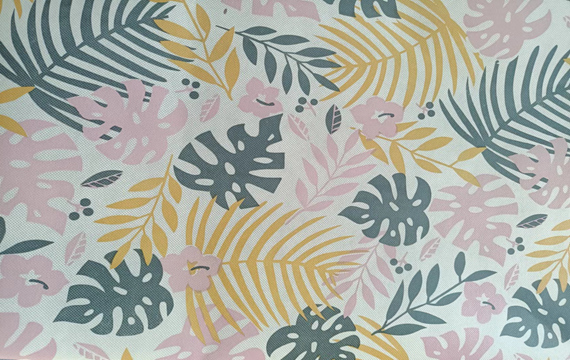
Digital printing/Heat transfer printing on PET non-woven fabric
PET non-woven fabric is a high temperature resistant non-woven fabric material, which is very suitable for digital color printing and heat (thermal) transfer printing. The printing effect is very good, the colors are bright, and the restoration and saturation are very ideal. It can be produced in small batches or large-scale mass production. It is suitable for making wallpapers, floor mats, tents, bags, etc.
Why do we choose thermal transfer for large quantities and digital thermal transfer for small quantities?
Because thermal transfer requires the production of electric engraving plates, while digital thermal transfer does not. In contrast, the cost of thermal transfer is relatively high, but why do people still choose thermal transfer when the quantity is large? In addition to quality issues, the most important issue is productivity. Thermal transfer can print thousands of products in an hour, but digital thermal transfer can only print about a hundred products in an hour. So if it is just to make some commemorative gifts, people will choose digital thermal transfer, but if it is for the production of manufacturers, they will choose thermal transfer.
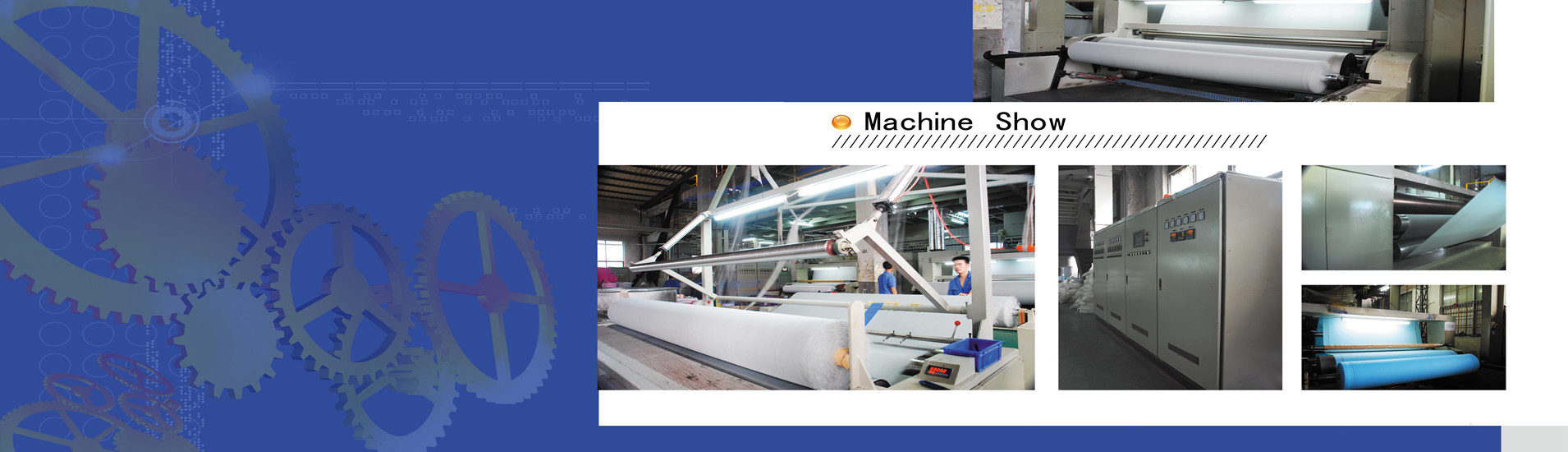
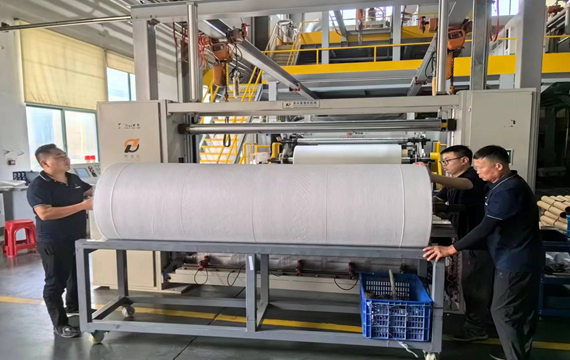
2m PET Nonwoven Line
The 2M PET (polyester) nonwoven production line basic parameters are as follows:
Gsm Range: 15gsm – 260gsm
width: 20cm – 250cm
Max speed : 150 m/min
Capacity: 2000 mt/year
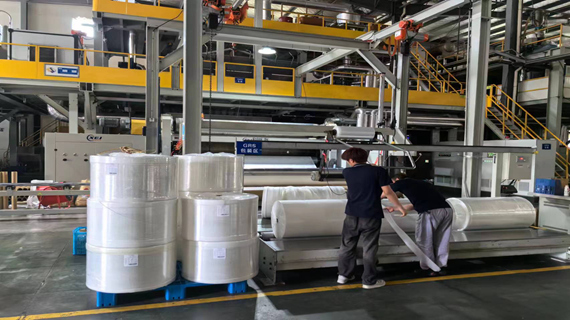
3.2M PET (polyester) Nonwoven Line
The 3.2M PET (polyester) nonwoven production line basic parameters are as follows:
Gsm Range: 15 gsm – 260 gsm
width: 15cm – 320 cm
Max speed : 400 m/min
Capacity: 3000 mt/year
Related Hot Selling Products
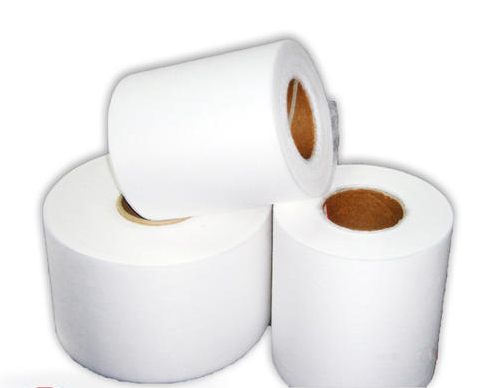
What is the difference : PET Nonwoven vs RPET Nonwoven?
PET nonwoven and RPET(recycled pet) non woven are both made from polyester fibers, but they have some key differences in their source and properties.
PET nonwoven material is made from virgin polyester fibers. However,RPET nonwoven fabric is made from recycled PET fibers. RPET stands for recycled polyester, which typically comes from discarded plastic bottles and other bottles. RPET nonwoven fabric has similar properties to PET nonwoven, but it is more sustainable.

Comparison of PET Nonwoven and RPET Nonwoven
| Feature | PET Nonwoven | RPET Nonwoven |
|---|---|---|
| Raw Material | Virgin polyester fibers | Recycled PET fibers |
| Sustainability | Less sustainable than RPET | More sustainable |
| Durability | Durable | Durable |
| Wrinkle resistance | Wrinkle-resistant | Wrinkle-resistant |
| Ease of care | Easy to care for | Easy to care for |
| Cost | Typically less expensive than RPET | Typically more expensive than PET |
| Applications | Shopping bags, packaging materials, disposable products | Shopping bags, packaging materials, apparel, home goods |